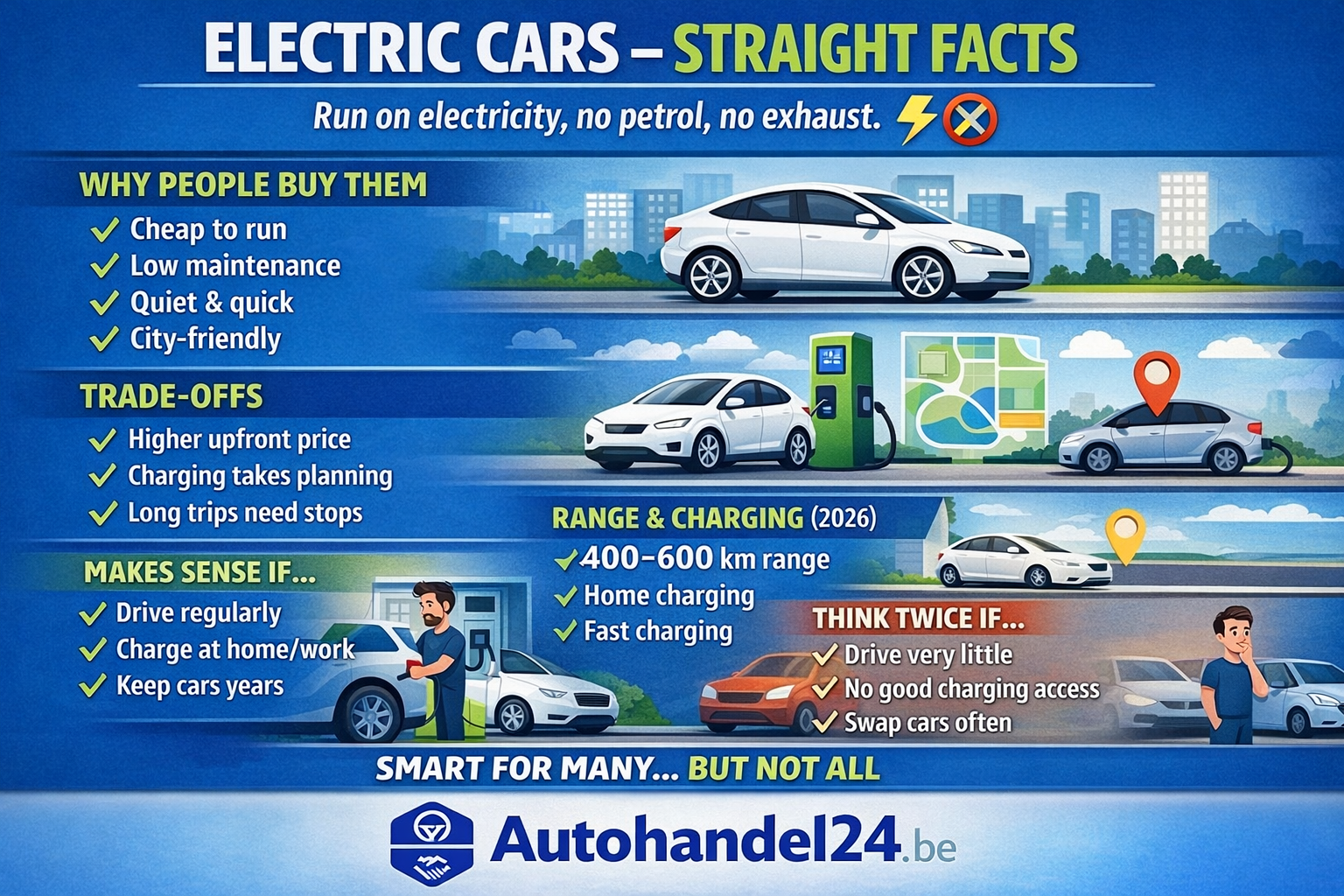
In 2026, electric cars are no longer a trend. They’re mainstream.
The real question is simple: do they make sense financially and practically?
Short answer: yes, but it depends on your situation.
Electric cars are usually more expensive upfront than comparable petrol or diesel cars.
However:
Electricity per kilometer is significantly cheaper than fuel.
Maintenance costs are lower: no oil changes, fewer moving parts.
Over 5–8 years, the total cost difference can be substantial.
Bottom line: higher purchase price, but lower running costs.
By 2026:
Charging infrastructure is well developed in cities and along highways.
Home charging = convenient and cheap.
Fast charging = quick, but more expensive.
Conclusion: practical for most people, as long as charging can be planned.
In many EU countries:
Lower taxes
Financial incentives
Purchase subsidies (still available in 2026, though reduced)
These benefits help offset the initial cost.
Modern EVs offer 400–600+ km of real-world range.
More than enough for daily driving.
Long trips require some planning, nothing extreme.
Much better than in the early EV years.
Strongly depends on brand, battery condition and model reputation.
✔️ Worth it if you drive regularly, can charge easily, and plan to keep the car long-term.
❌ Less attractive if you rarely drive or change cars every 1–2 years.
In 2026, electric cars are a smart, practical choice for most drivers.









Comments